Manufacturing problems / Leak testing A real problem. The right specialists.
Choose the rightleak testing principle. Pressure decay, flow or tracer gas? Compare principles and limitations against your component, required evidence and actual testing process.
No account required The method can remain open
Aaron ScallaManaging Director, CorDev GmbH Inspection principle Schematic principle, not to scale. The drawings explain the inspection task; performance must be validated on real components. See the detailed principle ↓
You describe the problem. We clarify the next technical step.Component → objective → suitable specialist
Your starting point
Compare against the right objective. Share page 01 Detect or locate? Do you need an overall pass/fail result or the leak location?

02 Laboratory or production? A sensitive laboratory setup may not fit a production cycle.
03 Stable or sensitive component? Temperature, deformation, humidity and pressure resistance influence testing.
The inspection principle
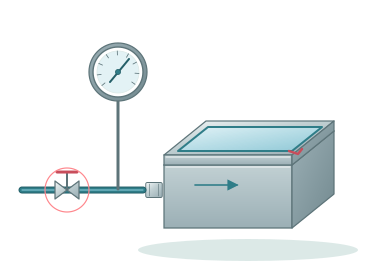
Three visibly different measurement principles. Schematic · not to scale
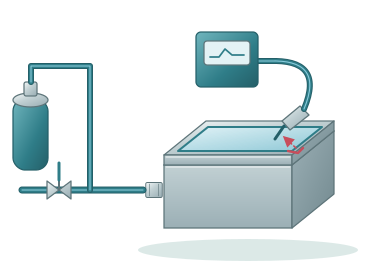
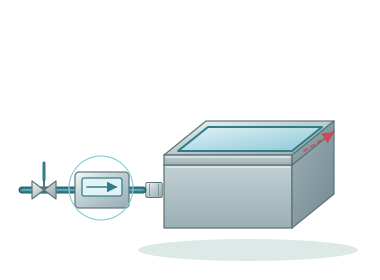
01 Pressure decayIsolate the supply after filling, then observe pressure in the test volume. 02 FlowKeep the supply connected and measure the required gas flow under defined conditions. 03 Tracer gas / sniffingFill with suitable tracer gas and use an external probe to seek escaping gas.
Schematic principle, not to scale. The drawings explain the inspection task; performance must be validated on real components.
A practical technical start
Four methods at a glance. Detection limits and total costs must be evaluated for the actual setup.
Specialised contactless or imaging methods can be additional candidates when suitability is demonstrated for the specific task.
Pressure decay Observe pressure change over time; temperature, stabilisation and deformation may affect the result.
Flow Measure gas flow needed to maintain pressure; match range, supply and setup stability to the task.
Helium Detect suitable tracer gas; include gas supply, sealing and equipment requirements.
Forming gas Detect hydrogen-containing tracer gas with suitable instrumentation; consider access, background and the measurement concept.
What happens next
A clear next step for your inspection task. 01 Describe the problem A short description is enough to begin. Add photos or requirements if available.
02 Clarify the task CorDev clarifies open questions with you and identifies the support your task needs.
03 Agree the next step We agree the involvement of suitable specialists with you. Testing or a pilot requires a separate agreement.
Your inspection task
What do you need to establish on your component? Describe what you observe and what you want to achieve. You do not need to know the right technology yet.
TopicCompare leak testing methods
Initially free and non-binding. No account required.
Before you ask
Frequently asked questions. Which method costs least? Total cost includes the component, cycle, fixture, media, maintenance and incorrect decisions. The method name alone does not determine cost.
Is helium always best? No. Potential sensitivity is one factor; effort, part behaviour and the actual requirement must fit.
Can we compare on samples? A shared test plan with representative good and defective parts can support the decision. Scope and reference evidence follow your task.
Does submitting create a paid order? No. Paid work requires a separate, express agreement.
Technical background