CorDev Corporate Development Telekom Business Partner

A real problem. The right specialists.

Test for leaks.At real production speed.

The test must evaluate every part and fit your line. We consider cycle time, temperature, fixtures and decisions together as a production task.

Discuss production leak testing Initially free
and non-binding
No account requiredThe method can remain open
Aaron ScallaAaron ScallaManaging Director, CorDev GmbH
Inspection principleThe station is more than its instrument.
Schematic principle, not to scale. The drawings explain the inspection task; performance must be validated on real components. See the detailed principle ↓
You describe the problem. We clarify the next technical step.Component → objective → suitable specialist

Your starting point

Where does testing slow your line?

Share page
LinkedInWhatsAppFacebookE-Mail
01

The cycle is too long

Filling, stabilisation or handling takes longer than planned.

02

Results vary

Warm parts, changing surroundings or flexible geometries affect measurements.

03

Too many false rejects

Fixtures and seals can produce indications unrelated to the product defect.

The inspection principle

The station is more than its instrument.

Schematic · not to scale

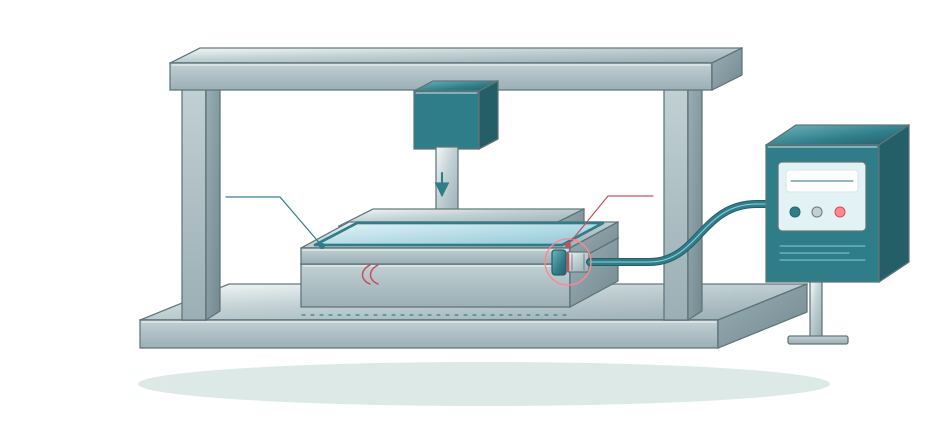
01Leak-test station

A fixture, actuator, test connection and instrument form one complete station.
  1. 01Fill
  2. 02Stabilise
  3. 03Measure
  4. 04Vent and transfer

Schematic principle, not to scale. The drawings explain the inspection task; performance must be validated on real components.

A practical technical start

Assess the complete station.

A production concept combines the product, handling and evaluation under representative conditions.

Test sequence
Include handling, sealing, filling and stabilisation in the overall cycle; consider variants and retesting.
Measurement conditions
Record temperature, pressure, volume, surroundings and fixture-seal condition.
Results and traceability
Agree reference parts, limits, incorrect decisions, records and individual component identity.

What happens next

A clear next step for your inspection task.

  1. 01

    Describe the problem

    A short description is enough to begin. Add photos or requirements if available.

  2. 02

    Clarify the task

    CorDev clarifies open questions with you and identifies the support your task needs.

  3. 03

    Agree the next step

    We agree the involvement of suitable specialists with you. Testing or a pilot requires a separate agreement.

Define your inspection task

Does the result reflect the product or the test sequence?

Illustrative scenario

Warm components fail in the line and are retested after cooling. The pilot must reproduce actual conditions and the entire sequence before changing a limit or replacing equipment.

This is an illustrative task, not a customer case or a performance promise.

Useful information for your enquiry

  • Loading, sealing, filling, stabilising and measuring sequence
  • Temperature history and patterns in the measured results
  • Reference parts, repeat tests and required total cycle

The next useful outcome: A trial plan to distinguish product effects from test-system effects, with verifiable acceptance criteria.

Discuss this task ↗

Your inspection task

What do you need to establish on your component?

Describe what you observe and what you want to achieve. You do not need to know the right technology yet.

Aaron Scalla
Aaron ScallaYour contact at CorDev

TopicInline leak testing

Initially free and non-binding. No account required.

Add files, timing or technical details
Add further requirements
Open the full technical request form ↗

Your request goes to CorDev first. We agree any transfer to suitable specialists with you. A request is not a paid order. Privacy

Security check

Enter the six digits shown in the image.

Loading security code…
* Required fields

Before you ask

Frequently asked questions.

Can the existing station be improved?

Possibly. Assess sequence, conditions, fixtures and failure patterns before choosing adjustment or replacement.

What cycle is achievable?

A defensible answer requires the specific setup, including time before and after measurement.

How do we reduce false rejects?

Separate product defects from test-setup effects and evaluate borderline cases with reference parts. Agree criteria before acceptance.

Does submitting create a paid order?

No. Paid work requires a separate, express agreement.

Technical background